Why Non-Vegetarian Samosas Are Famous Around the World
Samosas are one of the most loved snacks across the globe, especially in South Asia. While vegetarian samosas like potato-filled ones are popular, non-vegetarian samosas have created a special place in the hearts of food lovers. Filled with juicy meat, rich spices, and deep flavors, non-vegetarian samosas are known for their unique taste and satisfying experience.
What Are Non-Vegetarian Samosas?
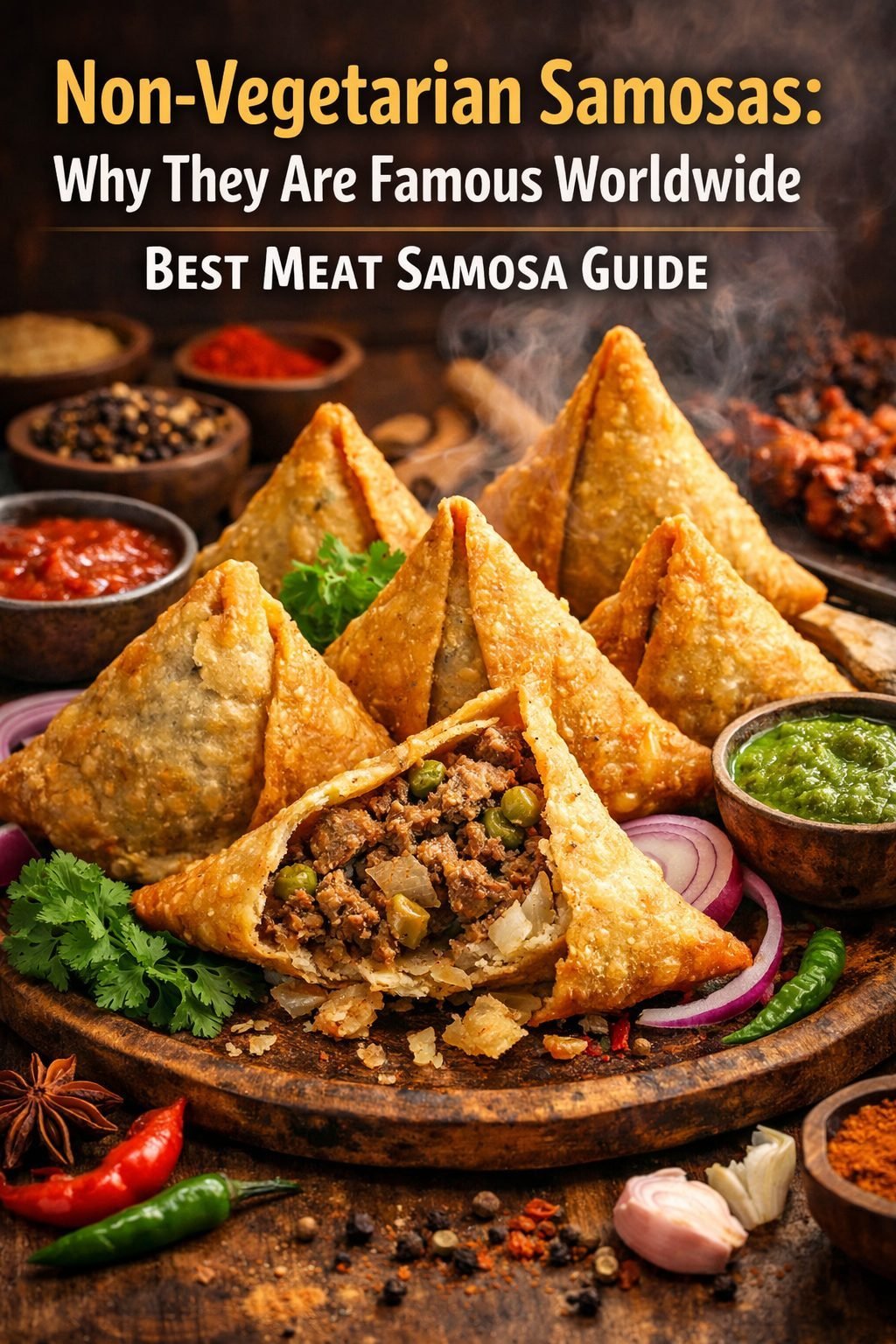
Non-vegetarian samosas are crispy, triangular pastries stuffed with flavorful meat fillings such as chicken, mutton, beef, fish, or prawns. The outer layer is made of refined flour dough, rolled thin and deep-fried until golden and crunchy. Inside, the filling is cooked with spices, herbs, onions, and sometimes eggs, creating a delicious combination of textures and flavors.
The Origin of Samosas
The history of samosas dates back to the Middle East and Central Asia. Traders and travelers brought this snack to the Indian subcontinent centuries ago. Over time, it evolved with local spices and cooking styles. In regions like India, Pakistan, and Bangladesh, non-vegetarian samosas became popular, especially among meat lovers.
Why Non-Vegetarian Samosas Are So Famous
1. Rich and Flavorful Taste
The biggest reason behind the popularity of non-vegetarian samosas is their rich taste. Meat fillings like chicken keema or mutton mince absorb spices very well, making every bite full of flavor. The use of spices like garam masala, cumin, coriander, chili powder, and ginger-garlic paste enhances the taste and aroma.
2. High Protein Content
Compared to vegetarian samosas, non-vegetarian samosas are high in protein. This makes them more filling and satisfying. People who prefer protein-rich snacks often choose meat samosas as a better option.
3. Variety of Fillings
Non-vegetarian samosas come in many varieties, such as:
- Chicken Keema Samosa
- Mutton Samosa
- Beef Samosa
- Fish Samosa
- Prawn Samosa
- Egg Chicken Samosa
This wide variety allows people to choose based on their taste preferences.
4. Street Food Popularity
In countries like India, Pakistan, and Bangladesh, non-vegetarian samosas are a famous street food. They are easily available at roadside stalls, tea shops, and food markets. Served hot with chutneys or sauces, they are a favorite snack during evenings.
5. Perfect for All Occasions
Non-vegetarian samosas are not just street food; they are also served at parties, weddings, and festivals. Their crispy texture and spicy filling make them a perfect appetizer for any gathering.
6. Affordable and Accessible
Another reason for their fame is affordability. Non-vegetarian samosas are budget-friendly and widely available. Even with meat fillings, they are reasonably priced, making them accessible to a large number of people.
7. Fusion and Global Appeal
Today, non-vegetarian samosas are not limited to South Asia. They have gained popularity worldwide. Many countries have introduced fusion versions, such as:
- Cheese chicken samosa
- Spicy BBQ chicken samosa
- Mexican-style samosa
- Middle Eastern meat samosa
This global adaptation has made them even more famous.
Cooking Method Overview
The preparation of non-vegetarian samosas involves two main steps:
- Preparing the filling by cooking minced meat with spices and herbs
- Filling the dough sheets, shaping them into triangles, and deep-frying
The frying process gives them a crispy outer layer, while the inside remains soft and juicy.
Why People Love Them So Much
People love non-vegetarian samosas because they offer a perfect balance of crunch and flavor. The outer crispy shell combined with spicy, juicy meat inside creates an irresistible snack. The aroma itself is enough to attract anyone.
They are also very versatile. You can enjoy them with tea, serve them as starters, or even include them in meal platters. Their portability makes them a convenient snack for travel and quick hunger cravings.
Cultural Significance
In many South Asian cultures, samosas hold a special place. They are often associated with hospitality and celebration. Offering samosas to guests is considered a warm gesture. Non-vegetarian samosas, in particular, are seen as a richer and more indulgent option.
Conclusion
Non-vegetarian samosas are famous because of their delicious taste, variety, affordability, and cultural importance. From street food stalls to international menus, they have become a global favorite. Whether it’s a spicy chicken samosa or a rich mutton filling, these crispy delights continue to win hearts everywhere.
If you are a food lover, trying different types of non-vegetarian samosas is a must. Their unique flavors and textures make them one of the best snacks in the world.
Related Blogs

Health Tips: Natural Herbs Traditionally Used for Wellness Support
Many herbs have been traditionally used to support the body's natural cleansing and wellness processes. Here are some popular herbs often
2026-06-02 SEE MORE
Simple Fitness Tips for a Healthier, Stronger You
Staying fit and healthy doesn’t require complicated routines or expensive equipment. With the right habits and a balanced lifestyle, an
2026-04-01 SEE MORE
5 Homemade Flavored Butter Recipes: How to Make Flavored Butter at Home
My recipes are simple, delicious, and they usually contain lots of butter. Butter is one of those magical ingredients that c
2026-06-13 SEE MORE
Indian Milkshakes: Why They’re Famous Worldwide & King of Summer Drinks
Why Indian Milkshake Drinks Are Famous Worldwide & Why They’re Called the King of Summer
Milkshakes have always been a favo
2026-04-17 SEE MORE